
The holidays are supposed to be a time of celebration, family, and togetherness. But when you’ve lost your spouse, this time of year can feel very different.
The traditions you once looked forward to may now bring unexpected sadness. Family gatherings can feel overwhelming. Even something as simple as receiving a holiday invitation can leave you wondering whether you should accept, decline, or just wait and see how you feel.
And then there are the questions from well-meaning family and friends.
Are you coming for Thanksgiving?
Do you want to spend Christmas with us?
Are you going to put up the decorations this year?
Sometimes, the hardest part isn’t deciding what you want to do. It’s figuring out how to explain what you need to the people around you.
I understand that feeling.
After losing my first husband, Greg, I experienced firsthand how much life changes when someone who was part of your everyday world is suddenly no longer there. And while the holidays can be especially difficult, I’ve also learned that there isn’t one right way to move through them.
You can miss your spouse, honor the memories you’ve shared, and still make room for new experiences.
You can also decide that this year, you simply need to do things differently. If you’re wondering how to cope with the holidays after losing your husband or wife, I want to share a few thoughts that may help you navigate the season in a way that feels right for you.
Why Are the Holidays So Hard After Losing a Spouse?
Grief doesn’t follow a calendar, but certain dates can bring emotions closer to the surface. Birthdays. Anniversaries. Family milestones. And, of course, the holidays. When you’ve shared years of traditions with someone, those traditions become part of your life together.
Maybe your husband always carved the Thanksgiving turkey.
Maybe the two of you decorated the Christmas tree while listening to the same music every year.
Maybe you hosted the entire family, traveled to visit relatives, or spent quiet holiday mornings together.
After a spouse dies, those familiar routines can become reminders of what’s changed. Sometimes it’s the big moments that are difficult. Other times, it’s the small ones that catch you off guard. You might feel fine while shopping for gifts, only to become emotional when you see something your spouse would have loved. Or you may genuinely enjoy a family gathering and still feel an overwhelming sense of loss when you return to an empty house.
Grief and happiness can exist in the same moment.
Feeling one doesn’t cancel out the other. And understanding that can help take some of the pressure off trying to have a particular kind of holiday.
1. Give Yourself Permission to Do the Holidays Differently
One of the biggest challenges after losing a spouse can be the expectations surrounding the holidays. Sometimes those expectations come from family members who want everything to feel normal. Sometimes they come from ourselves. We think about what we’ve always done and feel obligated to continue doing it. But what worked for your family before your loss may not be what works for you now.
And that’s okay.
Maybe you used to host Thanksgiving dinner for twenty people, but this year, the thought of preparing a meal and entertaining everyone feels exhausting. Maybe you’ve always traveled for Christmas, but you’d rather stay home. Or perhaps you want to be surrounded by people because being alone feels harder.
There is no universal answer.
You might decide to:
- Attend a holiday gathering for only an hour or two.
- Let someone else host the family dinner.
- Skip a particular tradition this year.
- Spend the holiday with friends instead of family.
- Take a trip somewhere you’ve always wanted to visit.
- Keep certain traditions while creating entirely new ones.
And here’s something else worth remembering. You don’t have to make a decision today about how you’ll feel three weeks from now. It’s perfectly reasonable to tell someone that you’d love to be included but may need to decide closer to the holiday. Giving yourself flexibility can make the season feel less overwhelming.
2. Learn How to Set Holiday Boundaries Without Feeling Guilty
Setting boundaries after losing a spouse isn’t always easy. You may worry about disappointing family members or hurting someone’s feelings. You may feel pressure to attend events because everyone assumes being around people is what’s best for you. But boundaries aren’t about pushing people away. They’re about helping others understand what you need. And sometimes, that starts with finding the right words.
What can you say when you don’t want to attend a holiday gathering?
You don’t need a lengthy explanation.
You might say:
“Thank you so much for including me. I’m going to keep things quiet this year, but it means a lot that you thought of me.”
Or:
“I’d love to see everyone, but I don’t think I’m up for the full celebration. Would it be okay if I stopped by for dessert?”
If you’re unsure how you’ll feel:
“I appreciate the invitation. I’m still figuring out what feels right this year. Could I let you know closer to the date?”
These are simple, respectful ways to communicate your needs while keeping the connection open.
And if you change your mind, you’re allowed to say that, too.
What if your family doesn’t understand?
This can be especially difficult.
Your adult children may want to preserve familiar traditions. Your siblings may assume you’ll attend the usual gathering. Friends may encourage you to get out more because they don’t want you to be lonely.
Often, their intentions come from a place of love.
But they may not fully understand what the experience feels like for you.
You might explain:
“I know everyone wants the holidays to feel special, and I do too. I’m just finding that some things are harder for me this year. I appreciate your understanding while I figure out what I’m comfortable with.”
You don’t have to convince everyone that your feelings are reasonable.
You can simply communicate them.
3. Tell People What Kind of Support You Actually Need
One thing I’ve noticed about grief is that people often want to help but don’t know how. Some people offer advice. Others encourage you to stay busy. Some avoid mentioning your spouse because they’re afraid of upsetting you. And others give you so much space that you end up feeling forgotten.
The problem is that what feels supportive to one person may not feel supportive to another. You might want someone to invite you to dinner. Someone else may prefer a quiet phone call. Another widow may simply want a friend to sit with her and talk about her husband. There is no one-size-fits-all approach.
That’s why communication matters.
How do you ask for support when you’re grieving?
Try being specific about what would help.
For example:
- If you want company: “I’ve been feeling a little lonely lately. Would you have time to get coffee this week?”
- If you want to be included: “I’d still love to be invited to family gatherings, even if I don’t always feel up to attending.”
- If you want to remember your spouse: “It would mean a lot to me if we could share a few memories of him during dinner.”
- If you need space: “I appreciate you checking in. I’m going to take a little quiet time, but I’ll reach out when I’m ready.”
- If you need practical help: “Would you be able to help me bring the holiday decorations down from the attic?”
Asking for support doesn’t mean you’re asking someone to solve your grief. Sometimes, you’re simply giving them an opportunity to show up for you in a meaningful way.
A Free Resource to Help You Find the Words
I know these conversations aren’t always easy, especially when you’re already carrying so much emotionally.
That’s why I’ve created a free resource:
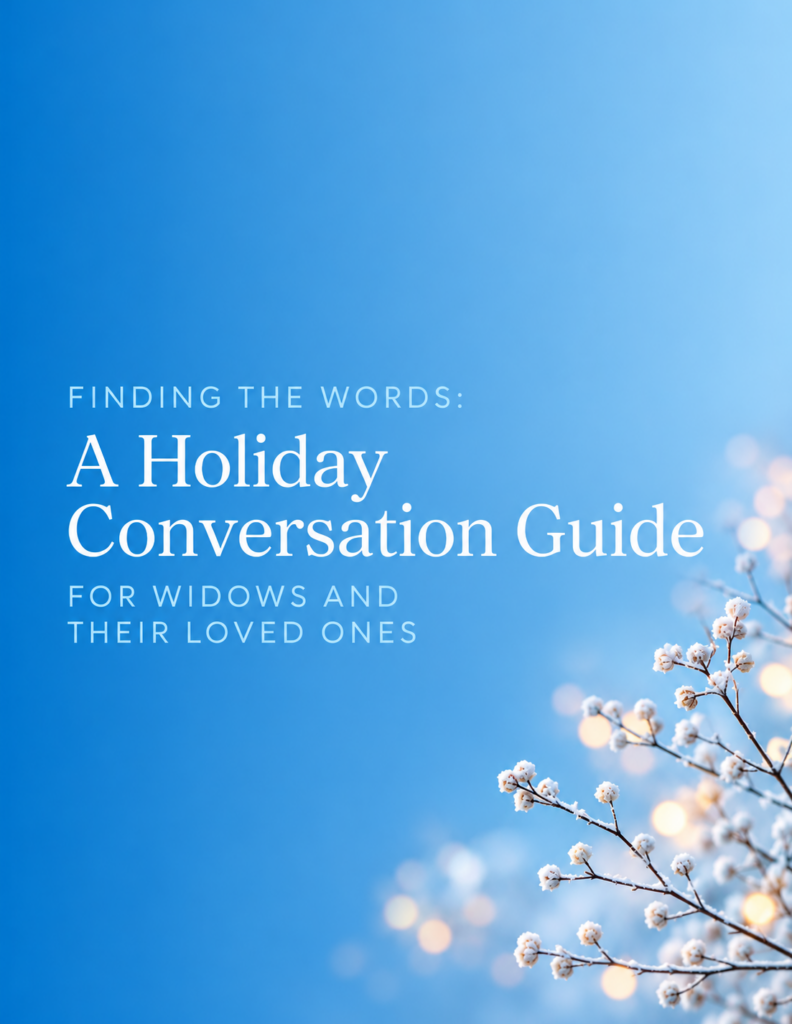
Finding the Words: A Holiday Conversation Guide for Widows and Their Loved Ones
Inside, you’ll find practical phrases and conversation starters to help you:
- Decline invitations without feeling obligated to explain everything.
- Ask family and friends for the support you need.
- Set boundaries around holiday gatherings and traditions.
- Communicate when your plans or feelings change.
- Talk about remembering your spouse during the holidays.
It also includes guidance for family and friends who want to be supportive but aren’t sure what to say.
And there’s a personal holiday note you can complete and share with the people closest to you.
DOWNLOAD YOUR FREE HOLIDAY CONVERSATION GUIDE
You don’t have to find all the right words on your own.
4. What If You Feel Alone During the Holidays?
Not every widow has a large family or a close circle of friends to lean on. Sometimes family members live far away. Sometimes friendships change after losing a spouse. And sometimes you can be surrounded by people and still feel incredibly alone. If you’re experiencing that kind of loneliness, the holidays can make it even more noticeable. But I want to encourage you to remember that your community doesn’t have to look the way it used to.
It’s possible to build new connections in this chapter of life. And you don’t have to do it all at once.
Where can widows find support and community?
There are many places to begin, depending on what feels comfortable for you.
Widow and grief support groups
Local bereavement groups, community organizations, and online widow communities can provide opportunities to connect with people who understand some of what you’re experiencing. Sometimes it helps to talk with someone who doesn’t need a long explanation.
Community centers and libraries
Many local libraries and community centers offer classes, workshops, book clubs, and social activities. These can be low-pressure ways to meet people who share your interests.
Faith communities
If faith is part of your life, your place of worship may offer support groups, holiday gatherings, or opportunities to volunteer.
Hobbies and interest groups
Walking clubs, gardening groups, art classes, and other activities can help you connect with people through something you enjoy.
Reconnecting with old friends
Sometimes the first step toward connection is simply reaching out to someone you haven’t spoken to in a while. You might be surprised to learn that they’ve been thinking about reconnecting, too. And if joining a group feels like too much right now, that’s okay. Start with one small step. Connection doesn’t have to happen overnight.
5. Consider Giving Back During the Holiday Season
There’s something meaningful about helping someone else, especially during a season when you may be struggling to find your own footing. Volunteering won’t erase grief. And I would never suggest that staying busy is the answer to losing someone you love. But sometimes, contributing to something outside ourselves can create moments of connection, purpose, and even unexpected joy.
The holidays offer many opportunities to do that.
Ways to give back during the holidays
Volunteer at a food pantry or community meal.
Many organizations need extra help preparing and distributing food during Thanksgiving and Christmas.
Participate in a holiday gift program.
Local nonprofits and community organizations often coordinate gifts for children, older adults, and families experiencing difficult circumstances.
Visit someone who may be lonely.
A neighbor, an older relative, or someone living in a care facility may appreciate a visit or phone call.
Share a skill or talent.
If you enjoy baking, crafting, organizing, or helping with community events, there may be a local organization that could benefit from your talents.
Support a cause that mattered to your spouse.
This can be a meaningful way to honor their memory while contributing to something they cared about. Of course, giving back doesn’t have to involve a formal volunteer commitment. Sometimes it’s dropping off a meal for a neighbor. Sending a handwritten card. Or reaching out to someone who might also be having a difficult holiday season.
Small acts of kindness matter.
And sometimes they create connections we didn’t know we needed.
6. Create New Holiday Traditions While Honoring Your Spouse
One of the questions that can come up after losing a spouse is whether to continue old traditions or begin new ones. And the answer can be both. You don’t have to erase the past to make room for the future. You might decide to prepare your spouse’s favorite holiday dish. Hang a special ornament. Light a candle in their memory. Share stories around the dinner table. Make a donation to a cause they cared about. Or invite family members to participate in something that reminds everyone of the person they loved.
At the same time, you might discover that some traditions no longer feel right. Maybe you want to travel instead of hosting. Maybe you’d like to volunteer on Christmas morning. Maybe you want to spend Thanksgiving with friends. Or perhaps you’d like to create a tradition that is entirely your own.
Making new memories doesn’t mean you’re leaving your spouse behind.
It means you’re allowing your life to continue growing around the love and memories you carry. And you can take your time figuring out what that looks like.
7. How Can Family and Friends Support a Widow During the Holidays?
If you’re reading this because someone you love has lost their spouse, I’m glad you’re here. The holidays can be a difficult time to know what to say or do. You may worry about bringing up their loss. You may not know whether to invite them to gatherings. Or you may feel helpless because you can’t change what they’re going through. But supporting someone who is grieving doesn’t require perfect words.
Often, it’s the small, thoughtful gestures that mean the most.
Keep inviting them, even if they decline
A widow may not feel ready to attend every gathering, but that doesn’t necessarily mean she wants to stop being included. Let her know the invitation is there without making her feel guilty if she says no.
Ask what would be helpful instead of assuming
Rather than deciding what someone needs, consider asking. “Would you like some company this weekend, or would you prefer a little quiet time?” Giving someone a choice can be more supportive than making plans on their behalf.
Don’t be afraid to mention their spouse
Many grieving people appreciate hearing their loved one’s name and knowing that others remember them. You might share a favorite memory or ask whether they’d like to include a remembrance during a holiday gathering.
Of course, let them guide the conversation.
Offer specific help
Instead of saying, “Let me know if you need anything,” consider offering something concrete.
“Can I bring dinner over on Tuesday?”
“Would you like help putting up the decorations?”
“Do you want someone to go shopping with you?”
Specific offers can make it easier for someone to accept support.
Understand that grief doesn’t have an expiration date
The first holiday season after losing a spouse can be especially difficult, but grief doesn’t disappear after the first year. Someone may still find the holidays challenging five or ten years later. Continue checking in. Continue including them.
And remember that support matters long after the initial loss.
8. Remember That You Are Allowed to Enjoy the Holidays Again
I want to end with something that I think is important. You are allowed to enjoy your life. You’re allowed to laugh at Thanksgiving dinner. You’re allowed to look forward to Christmas. You’re allowed to take a vacation, spend time with friends, volunteer, meet new people, or discover new traditions. And you’re also allowed to have days when none of those things sound appealing.
There may be moments when you feel happy and then suddenly feel guilty for enjoying yourself. But experiencing joy doesn’t mean you’ve forgotten your spouse. It doesn’t diminish your marriage or the life you shared. It simply means you’re still here, continuing to experience life.
And that matters.
You don’t have to rush toward a new normal. You don’t have to pretend everything is fine. You don’t have to make the holidays magical for everyone else. You can move through this season one decision, one conversation, and one day at a time. And you can give yourself permission to discover what feels meaningful to you now.
Frequently Asked Questions About Grief and the Holidays
Is it normal to want to skip the holidays after losing a spouse?
Yes. Many people find holiday celebrations difficult after losing a spouse because familiar traditions can bring up memories and emotions. It’s reasonable to simplify your plans, decline invitations, or celebrate differently. You can also change your mind as the holiday approaches.
How do I tell my family I don’t want to celebrate Christmas this year?
Try communicating your feelings clearly and kindly. For example: “I know Christmas is important to everyone, but I’m not feeling up to our usual celebration this year. I appreciate your understanding, and I’d love to find another way to spend time together.” You don’t need to provide a detailed explanation to justify your decision.
How can I cope with my first Christmas without my husband or wife?
Consider keeping your plans flexible, choosing one or two traditions that feel meaningful, asking for support, and allowing yourself time away from gatherings when needed. You may also find comfort in honoring your spouse through a favorite tradition or memory. There is no single right way to experience your first holiday season after loss.
What can I do if I have no family to spend the holidays with?
You might explore local community events, grief support groups, volunteer opportunities, faith communities, or gatherings organized through libraries and community centers. You can also plan a quieter day around activities you enjoy. Spending a holiday differently doesn’t mean it has to be without meaning.
How do you support a widow during the holidays?
Offer invitations without pressure, check in regularly, listen without trying to fix their grief, and ask what kind of support would be helpful. Remembering their spouse and offering specific practical assistance can also be meaningful.
Is it okay to create new holiday traditions after losing a spouse?
Absolutely. Creating new traditions doesn’t mean forgetting your spouse or replacing the memories you shared. You can preserve meaningful parts of your past while exploring new ways to celebrate that fit your life today.
Finding the Words This Holiday Season
If there’s one thing I hope you take away from this, it’s that you don’t have to navigate the holidays according to anyone else’s expectations. You can ask for what you need. You can change your plans. You can honor your spouse and still create new memories. And you can let the people around you know how they can support you.
Sometimes, the hardest part is simply finding the words.
That’s why I created Finding the Words: A Holiday Conversation Guide for Widows and Their Loved Ones.
It’s a free resource filled with conversation starters, practical phrases, and gentle reminders to help you communicate your needs and navigate the season with the people you love.
DOWNLOAD THE FREE HOLIDAY CONVERSATION GUIDE
And if you know someone who could use a little extra support this holiday season, please consider sharing this article or the guide with them. Sometimes knowing that someone understands can make all the difference.
With love,
Donna Jean Kendrick


0 Comments